
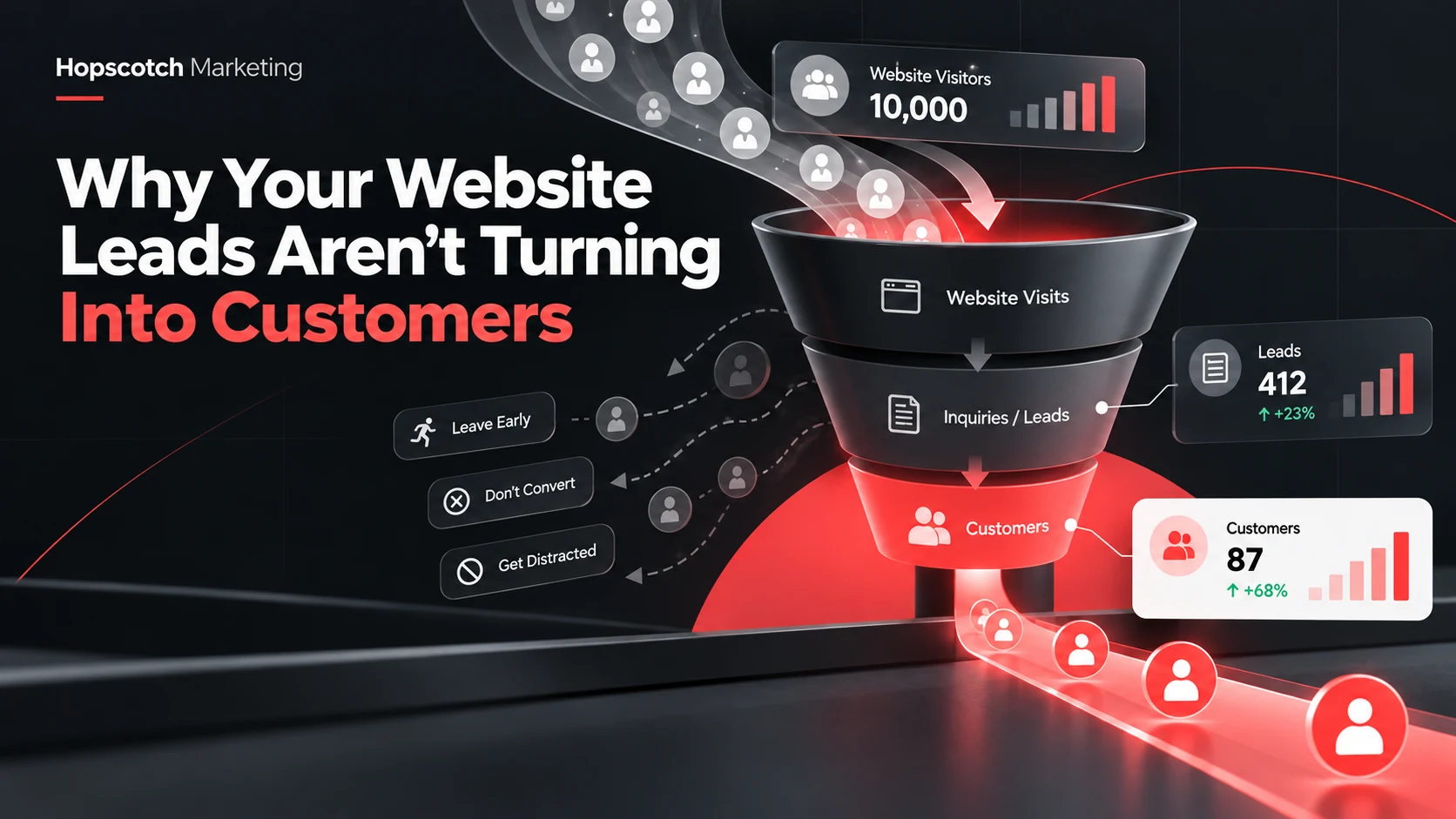
Your website is generating contact forms and phoneinquiries. That’s encouraging. But if those leads rarely become appointments, proposals, or paying customers, the problem may be happening after someone makes contact—not on the website itself.
This is different from a website that struggles to earn inquiries in the first place. Once a visitor asks for help, the customer journey moves into response times, expectations, sales conversations, and follow-up. Understanding where leads stall is the first step toward improving the result.
First, make sure the leads are a good fit
A high inquiry count can be misleading if many requests fall outside your service area, budget range, or core services. Before blaming the sales process, ask whether the website and marketing channels are attracting the right audience.
Review a reasonable sample of recent inquiries. Which services did people request? Where were they located? Were they looking for immediate help, researching options, or seeking something you don’t offer? This information can help refine website copy and marketing targeting.
1. The lead didn’t get a timely response
Someone requesting an estimate may contact several companies. A delayed response gives them more time to move on, especially when the need feels urgent. That doesn’t mean every business needs round-the-clock staffing; it does mean the customer should know what to expect.
Confirm that form notifications reach the right person, calls aren’t being silently routed to the wrong destination, and team members know who owns each inquiry. Consider a clear acknowledgment message stating when a response is likely, provided you can meet that expectation.
2. Your first response doesn’t answer the customer’s question
A generic “Thanks, we’ll get back to you” can feel less helpful than a short reply that confirms the requested service, outlines the next step, and asks one or two useful questions. People want to know the business has understood why they reached out.
For example, a homeowner requesting roof repair may want to know whether an inspection is needed and how scheduling works. A business owner asking about SEO may want to know what information is required for a meaningful first discussion. The reply should reduce uncertainty, not create another obstacle.
3. There is no consistent follow-up process
Some prospects won’t reply to the first message. They may be busy, comparing options, or waiting for an internal decision. A respectful follow-up process can help—provided it is relevant and respects the person’s communication preferences.
A basic plan might include an initial response, a helpful follow-up after a reasonable interval, and a final check-in if there is still no reply. Do not turn a legitimate inquiry into a stream of repeated, unwanted messages. Make it easy for people to decline further contact.
4. Your website promised something the sales conversation doesn’t deliver
A mismatch between marketing claims and the next conversation can erode trust. If the page suggests immediate estimates but the team requires a lengthy intake process, or it promotes a service that isn’t actually available in that market, buyers may lose confidence.
Compare the language of high-performing landing pages with what staff say on the phone and in email. Make service boundaries, next steps, and important qualifications clear. A realistic promise consistently delivered is more persuasive than an exaggerated one.
5. Prospects don’t have enough information to make a decision
A lead may be qualified but not ready to buy. The next step could require a quote, timeline, examples of prior work, an explanation of the process, or a conversation with a decision-maker. Find out what information helps the prospect move forward rather than assuming every unanswered inquiry represents a lost customer.
Clear proposals and expectations can matter as much as a strong website. For more complex services, a simple explanation of milestones, deliverables, and responsibilities can remove friction.
6. You aren’t tracking what happens after an inquiry
If the only number you review is submitted forms, you’ll miss the difference between an unqualified lead, a missed call, a conversation, a proposal, and a signed customer.
- New inquiry: A person contacts your business.
- Contacted: Your team successfully responds.
- Qualified: The request fits your service and audience.
- Next step booked: A meeting, inspection, or estimate is scheduled.
- Proposal or quote: Relevant terms are presented.
- Won or lost: Record the outcome and, where appropriate, the main reason.
A shared spreadsheet can be a useful starting point. Record enough information to find patterns without collecting unnecessary personal details. If using a CRM, keep stage definitions simple and consistent across the team.
Work backward from the moment you lost momentum
Look at the most common drop-off point. If inquiries aren’t contacted, inspect notification delivery and staffing. If conversations happen but appointments don’t, review scheduling friction. If proposals aren’t accepted, ask whether qualification, positioning, or expectations need work.
Change one part of the process at a time where practical, and measure outcomes over a reasonable period. This helps you learn what actually improves performance instead of making sweeping changes based on a handful of anecdotes.
Your website and sales process should work together
A successful website does more than collect names. It sets accurate expectations, attracts appropriately matched customers, and makes the handoff to your team easy. Our website design services focus on the experience leading to the inquiry; our SEO services focus on attracting relevant search visitors. Your follow-up process completes the journey.
If you’re getting leads but not enough customers, talk with Hopscotch Marketing about where the process might be breaking down.